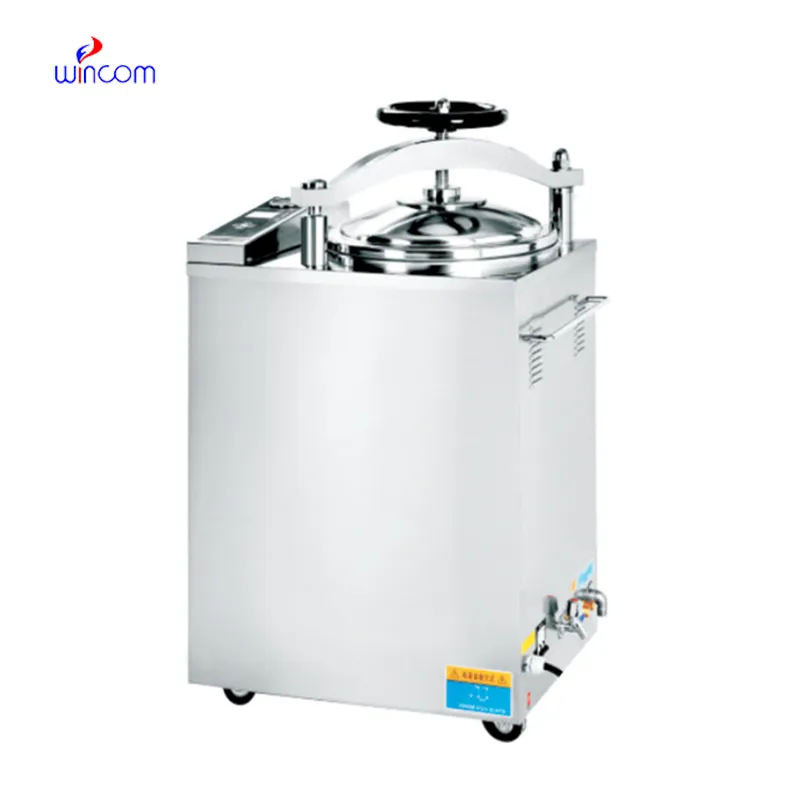
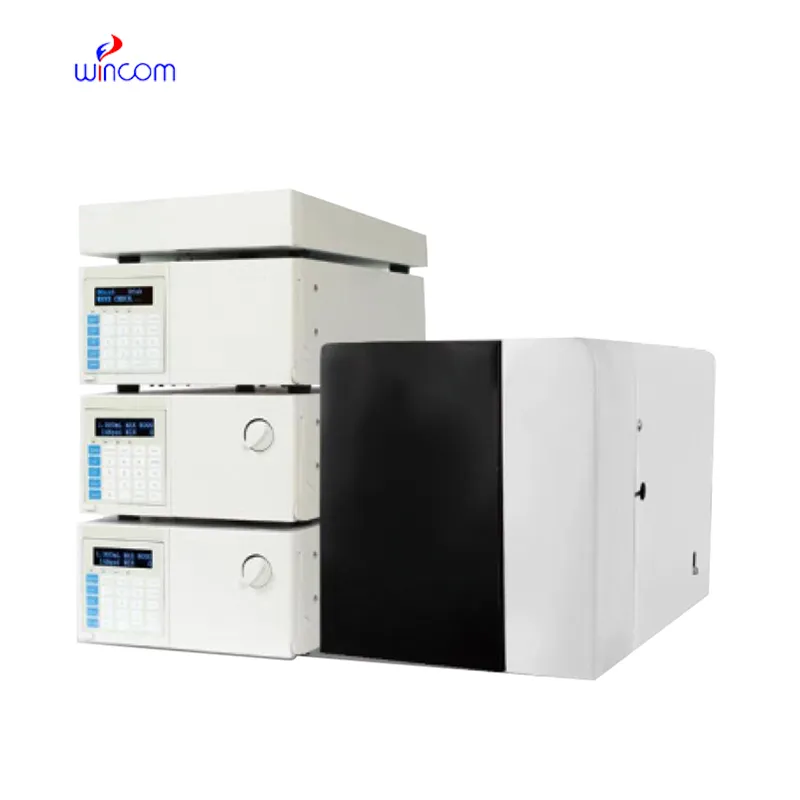
Recent innovations in benchtop high speed refrigerated centrifuge technology focus on the improvement of automation as well as information integration. Intelligent models now communicate with laboratory information management systems so that the recording of experimental parameters is no longer problematic. Noise reduction modules and ergonomic covers have also increased user comfort and safety. Also, controlled temperature chambers and high-speed rotors facilitate the handling of sensitive material without degradation. Such technology renders benchtop high speed refrigerated centrifuge equipment more adaptable to varying research needs, offering unparalled precision in particle separation and purification processes in countless industries.
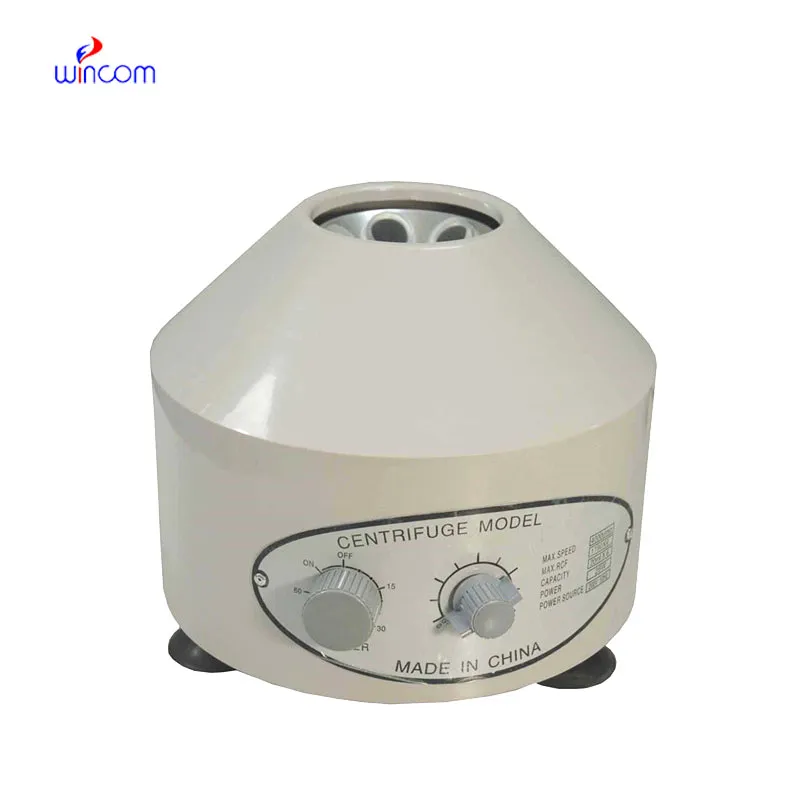
The applications of benchtop high speed refrigerated centrifuge span numerous scientific and industrial uses. In medicine, it is used to isolate blood components for transfusion and diagnostic purposes. In molecular biology, researchers use benchtop high speed refrigerated centrifuge to isolate DNA, RNA, and proteins for genetic studies. The pharmaceutical industry uses it to purify chemicals and enhance the quality of products. Environmental laboratories use benchtop high speed refrigerated centrifuge to test water and soil samples for contamination. Even in food processing, it aids in the cleansing of juices and the removal of oils. Its applicability ensures consistent outcomes in fields that require careful separation of substances.
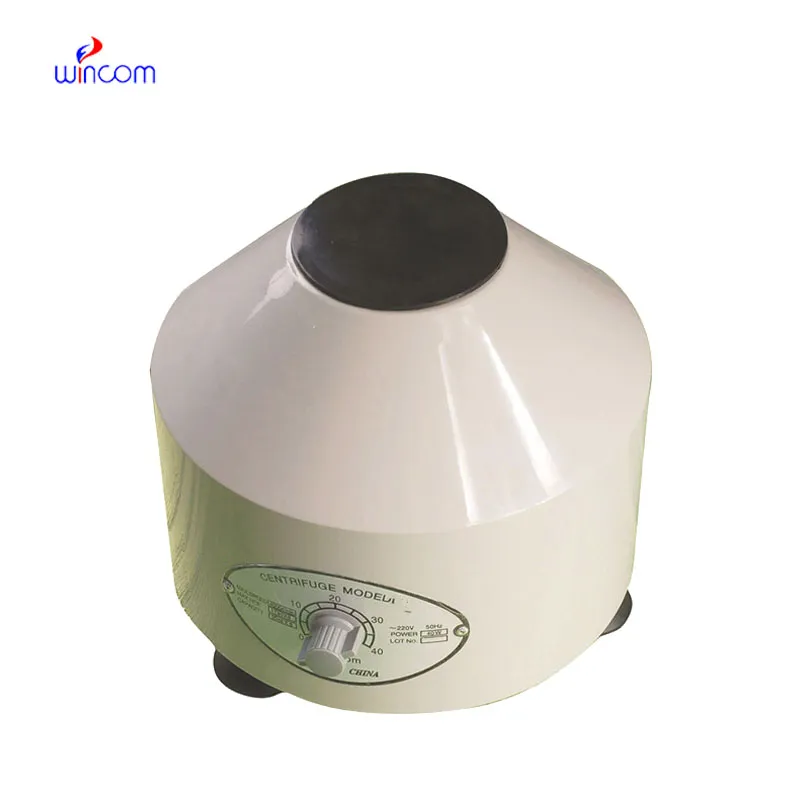
In the coming years, benchtop high speed refrigerated centrifuge development will move towards intelligent and autonomous operation. Artificial intelligence will predict sample behavior, with speed and duration controlled in real time. Quieter, more compact designs will be the priority for manufacturers to conserve space. Future cooling systems will benefit temperature-sensitive applications, with more widespread use in genomics and proteomics. Wireless connectivity and autocalibration will make it easier to manage benchtop high speed refrigerated centrifuge in busy laboratories. With the environment leading the way in manufacturing, recyclable materials and energy efficiency will also define benchtop high speed refrigerated centrifuge development in science and industry.

For long-term efficiency, benchtop high speed refrigerated centrifuge must be maintained with thorough attention to detail of operation. Every rotor and adapter must be checked for integrity before sample loading. After every cycle, the apparatus needs to be washed with neutral detergents and dried thoroughly. Vibration and mechanical stress are prevented by regular tests of balance. Seals and filters need to be replaced according to service schedules. Dust deposition is prevented by keeping the instrument in a covering when not used. If benchtop high speed refrigerated centrifuge apparatus is cared for according to disciplined procedure, equipment will give consistent high-performance performance year in year out.
A benchtop high speed refrigerated centrifuge makes the principle of rotational motion a tool of scientific inquiry and industrial productivity. Unrelenting spinning power applied to it fractions different materials in a sample on the basis of weight. It makes necessary procedures such as the analysis of blood, protein separation, and sewage treatment possible. benchtop high speed refrigerated centrifuge today combine strength with precision by offering variable speed ranges and advanced control mechanisms. Their use also extends beyond laboratories to fields like aerospace and environmental monitoring, showing both their scientific and utilitarian applications.
Q: What is a centrifuge used for? A: A centrifuge is used to separate mixtures based on density differences by spinning them at high speeds, allowing heavier particles to settle away from lighter ones. Q: How does a centrifuge work? A: A centrifuge operates by generating centrifugal force, pushing denser materials outward while lighter components remain near the center, resulting in effective separation. Q: What are common applications of a centrifuge? A: Centrifuges are used in laboratories, hospitals, and industries for blood testing, chemical analysis, purification, and sample preparation. Q: How often should a centrifuge be calibrated? A: Calibration should be performed at least once a year or whenever performance inconsistencies appear to ensure accuracy and reliability. Q: Can a centrifuge handle biological samples? A: Yes, many centrifuges are designed for biological materials such as blood, plasma, and cell cultures under controlled and sterile conditions.
The microscope delivers incredibly sharp images and precise focusing. It’s perfect for both professional lab work and educational use.
We’ve used this centrifuge for several months now, and it has performed consistently well. The speed control and balance are excellent.
To protect the privacy of our buyers, only public service email domains like Gmail, Yahoo, and MSN will be displayed. Additionally, only a limited portion of the inquiry content will be shown.
We’re looking for a reliable centrifuge for clinical testing. Can you share the technical specific...
Hello, I’m interested in your centrifuge models for laboratory use. Could you please send me more ...
E-mail: [email protected]
Tel: +86-731-84176622
+86-731-84136655
Address: Rm.1507,Xinsancheng Plaza. No.58, Renmin Road(E),Changsha,Hunan,China


 EN
EN
 af
af
 es
es
 ar
ar
 tr
tr
 sw
sw
 pt
pt
 th
th
 ur
ur
 bn
bn
 ne
ne
 vi
vi
 km
km
 lo
lo
 de
de
 ru
ru
 fi
fi
 nl
nl
 fa
fa
 fr
fr
 ko
ko